
Ingersoll Rand Gas-Driven Air Compressors: Power Anywhere You Need It
Posted by IAP on 10/22/2025
When the job site doesn’t have an outlet, downtime isn’t an option. Whether you’re on a construction site, running a service truck, or supporting a remote operation, compressed air still has to show up every day.
Ingersoll Rand gas-driven air compressors are built for that reality: dependable air power without relying on grid electricity, plus the durability and support buyers expect from Industrial Air Power.
In this guide, we’ll cover when a gas-driven compressor makes sense, how to choose between single-stage, two-stage, and bare-pump options, which models best fit common field applications, and where to shop the lineup.
What this guide coversJump to:Buying guide steps
Article sections
|
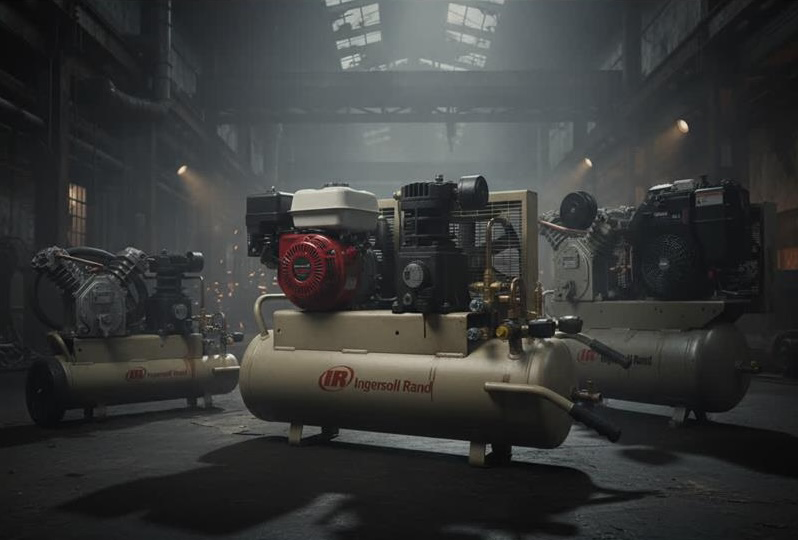
Portable compressed air for remote jobs, service trucks, and off-grid work.
|
Quick Answer: When should you choose a gas-driven air compressor?
Answer: Choose a gas-driven air compressor when electric power is limited, mobility matters, or your crew needs dependable compressed air in the field. Single-stage models are a strong fit for lighter mobile work, two-stage models make more sense for higher airflow and more demanding duty, and bare pumps are best when you’re building or replacing part of a custom setup.
When a gas-driven compressor makes sense
Gas-driven compressors solve a specific problem: you need compressed air where electric power is not readily available. That makes them a practical choice for fleet service, remote pneumatic applications, truck-mounted service work, construction crews, agricultural operations, and emergency backup air needs.
Industrial Air Power’s gas-driven category specifically highlights single-stage and two-stage Ingersoll Rand models for truck and industrial uses, plus direct-ship availability and expert technical support. These units are intended for demanding field environments, not just occasional backup duty.
Gas-driven is usually the right fit if:
- You work away from stable electrical power.
- You need air on a service truck, trailer, or mobile platform.
- You want fast deployment without generators or extension cords.
- You need field-ready airflow for impact tools, grinders, tire service, or maintenance work.
How to choose the right Ingersoll Rand gas-driven model
1. Match airflow to the work
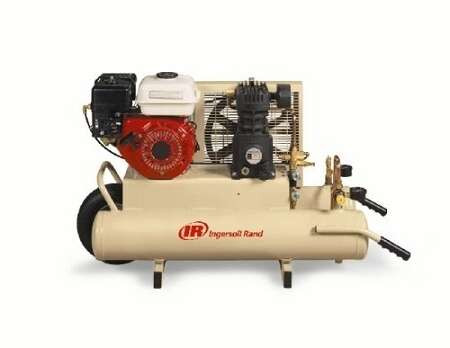
Start with the tools and processes that will run at the same time. The SS3J5.5GH-WB is rated at 11.8 ACFM at 90 PSI, which is a practical range for mobile mechanics, tire service, and lighter tool demand. Once airflow demand climbs, or multiple users need air at once, the two-stage lineup becomes the better fit.
2. Confirm your required PSI
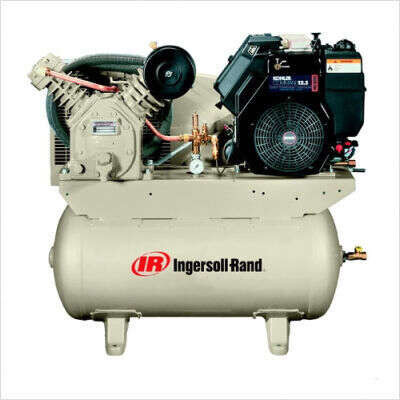
Higher-pressure applications and longer continuous tool use are where two-stage compressors start to pull away. The 2475F13GH and 2475F14G are the stronger fit when your demand is heavier or more sustained.
3. Decide how mobile the compressor needs to be
Wheelbarrow-style single-stage units work well for lighter movement and quick deployment. Horizontal-tank two-stage units are better when the compressor will live on a service vehicle, support heavier field maintenance, or run longer and harder throughout the day.
4. Choose complete unit vs. bare pump
Buy a complete gas-driven package when you want a ready-to-run compressor. Choose the 2475 gas bare pump when you are replacing a worn pump or building a custom mobile system around a proven two-stage platform.
5. Factor in engine preference and service conditions
The current lineup includes Honda and Kohler engine options, giving buyers flexibility around service familiarity, preference, and field support. For crews who standardize engines across multiple pieces of equipment, that can be a meaningful purchasing factor.
Single-stage vs. two-stage gas-driven compressors
| Factor | Single-Stage | Two-Stage |
|---|---|---|
| Best fit | Light-to-medium field service and mobile tool use | Heavier field maintenance, longer runtime, higher pressure demand |
| Mobility | Usually easier to move and deploy | Better for truck- or trailer-based setups |
| Pressure / workload | Good for lighter intermittent work | Better for higher pressure and more sustained use |
| Example model | SS3J5.5GH-WB | 2475F13GH / 2475F14G |
| Custom replacement option | Less common | 2475 gas bare pump |
Featured Ingersoll Rand gas-driven models
The current Industrial Air Power lineup gives buyers four strong paths: the lighter SS3J5.5GH-WB single-stage option, the 2475F13GH Honda-powered two-stage model, the 2475F14G Kohler-powered two-stage model, and the 2475 gas bare pump for custom replacement or build-out needs.
Featured gas-driven product options


Common applications and use cases
Gas-driven compressors are especially strong for fleet service and mobile repair, construction and heavy equipment support, farming and agricultural work, industrial backup air, and emergency production support.
In practical terms:
- Service trucks: tire service, roadside repair, mobile maintenance, and field tools.
- Construction: off-grid air for crews that can’t rely on power access.
- Farm and ranch work: seasonal or remote compressed air needs.
- Backup operations: compressed air when power interruptions or maintenance events disrupt normal systems.
Why buy gas-driven compressors from Industrial Air Power
Industrial Air Power positions itself as the largest online Ingersoll Rand equipment and parts distributor, with direct-ship compressors, expert technical support, and a very large related parts and accessory catalog. For buyers evaluating a portable gas-driven unit, that matters because support, parts access, and application guidance are often just as important as the compressor itself.
- Direct-ship gas-driven compressors from Ingersoll Rand
- Expert application help for compressor selection
- Access to related parts, lubricants, and accessories in one place
- Support for total cost of ownership and long-term reliability
FAQs about Ingersoll Rand gas-driven air compressors
When should I choose a gas-driven air compressor over an electric unit?
Choose gas-driven when your crew needs compressed air away from dependable electrical power, when mobility matters, or when a truck- or trailer-based setup is the most practical way to support the work.
What’s the difference between single-stage and two-stage gas-driven compressors?
Single-stage models are usually better for lighter mobile demand, while two-stage models are a better fit for heavier use, higher pressure, and more demanding field service conditions.
When should I choose a bare pump instead of a full compressor package?
A bare pump makes sense when you are replacing a worn pump or building a custom gas-driven setup rather than buying a complete ready-to-run package.
Which Ingersoll Rand gas-driven model is best for service trucks?
That depends on airflow, pressure, runtime, and portability needs. The SS3J5.5GH-WB suits lighter mobile work, while the 2475-series models are stronger options when demand is heavier or more sustained.
Conclusion
Ingersoll Rand gas-driven air compressors are built for buyers who need reliable compressed air away from fixed power. The right choice comes down to airflow, pressure, runtime, portability, and whether you need a complete package or a replacement pump. With the current lineup, Industrial Air Power gives buyers clear options across single-stage, two-stage, and bare-pump configurations.