
How to Choose an Industrial Air Compressor
Posted by IAP on 02/04/2026
At Industrial Air Power, we work with commercial and industrial facilities every week that deal with compressed air problems with their industrial air compressors. In most cases, the compressor itself is not defective, often the system was undersized, overworked, or selected without understanding how air is actually used day to day.
If you are comparing equipment for a shop, plant, or multi-user facility, this is the same evaluation process we use before recommending commercial air compressors to customers.
This article is written from the perspective of our staff. We supply equipment, stock parts, and support systems long after installation. That means we see the common failure patterns and the avoidable mistakes. The goal here is simple: help you choose a compressor that holds pressure, runs efficiently, and lasts.
By the end of this guide, you’ll know: (1) the CFM and PSI range you should size for, (2) which compressor type fits your runtime, and (3) when it’s time to upgrade based on real symptoms.
What this guide coversJump to:Sizing guide steps (1–5)
|
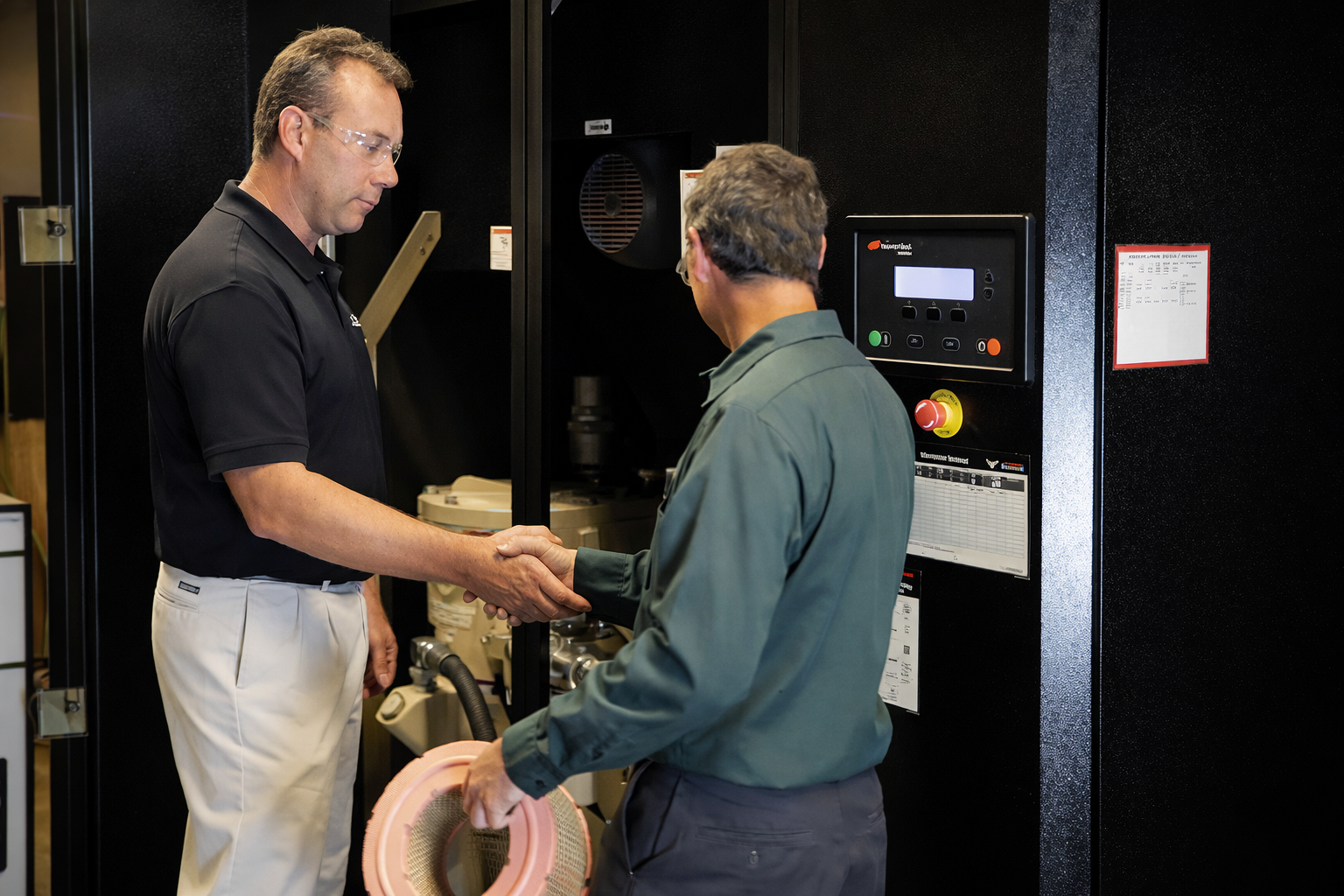
Changing air filter on a commercial cabinet air compressor.
|
Quick Answer: What’s the trick to choosing an industrial air compressor?
Answer: Choose a compressor that delivers the CFM you need at the PSI you need, while staying within its rated duty cycle. Estimate simultaneous air demand, confirm pressure at the point of use, match compressor type to runtime, then compare energy use and serviceability.
If you want a second set of eyes on sizing or you are replacing a system that never seems to shut off, get help sizing an air compressor.
How Industrial Air Power sizes commercial and industrial air compressors
Most compressor performance issues we see trace back to early sizing decisions. The framework below is what we use when a customer calls and says, “We added equipment and now our tools starve for air,” or “Our compressor runs nonstop.”
- Intermittent use: short bursts → usually reciprocating / two-stage depending on PSI.
- On/off all day: moderate runtime → reciprocating or rotary screw depending on CFM and hours.
- Continuous demand: steady airflow most of the day → typically rotary screw.
Step 1: Calculate commercial and industrial air demand (CFM)
CFM is the volume of air your system consumes. Every air tool, process, and leak adds to demand. In commercial and industrial environments, the key is simultaneous use. If three tools run at the same time, you size for three tools - not one.
If you want a solid primer, start with understanding compressed air flow and CFM.
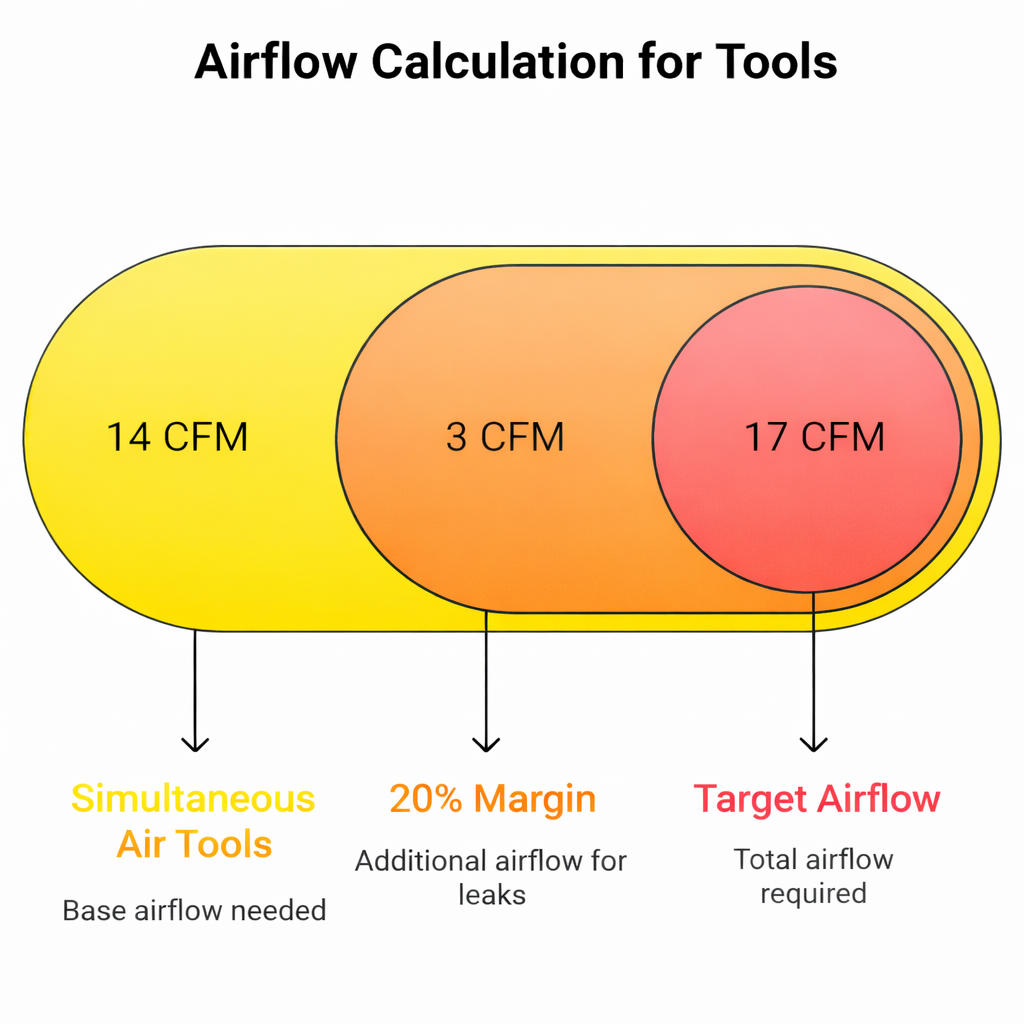
Diagram showing total CFM = sum of simultaneous tools + margin.
Below are typical tool air demand examples (illustrative; confirm against your tool specs):
- 1/2" impact wrench: ~4–6 CFM @ 90 PSI
- Die grinder: ~4–8 CFM @ 90 PSI
- HVLP spray gun: ~6–12 CFM @ 40–60 PSI
- Media blasting (small nozzle): often 10+ CFM @ 90 PSI
Rule of thumb: Add your simultaneous tools, then add ~20% margin for leaks and growth. We often see shops size compressors around one tool and add equipment later. That almost always turns into pressure drop complaints within the first year. If you expect growth, plan for it now, it is usually cheaper than replacing a compressor early.
Step 2: Confirm required PSI across the facility
PSI is pressure. Most air tools are designed around 90 PSI, but required pressure is not always what the tool label says. Pressure drop happens across filters, dryers, long piping runs, undersized hose, and quick connects. You size for the highest pressure requirement at the point of use.
For a quick refresher, review compressed air pressure requirements.
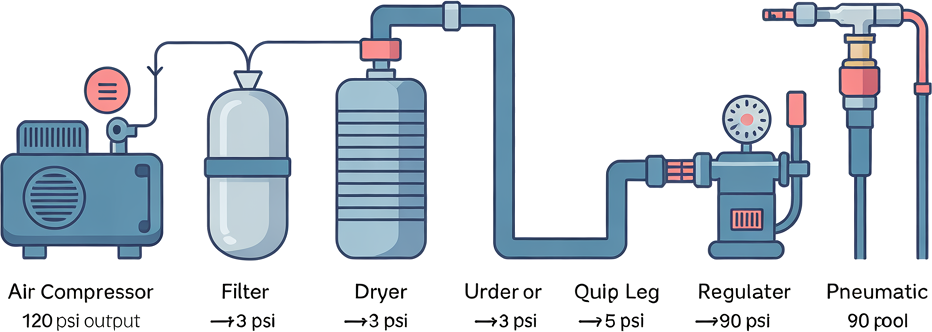
Pressure drops before point of use.
Single-stage compressors are typically limited to lower maximum pressure. Two-stage compressors are better suited for applications that consistently require higher pressure. If your application needs higher pressure, confirm your distribution system can actually deliver it where it matters.
Single-stage compressors and Two-stage compressors are commonly selected based on pressure needs and runtime as both must match real operating conditions.
Step 3: Match compressor type to runtime
Compressor type should match runtime. Reciprocating compressors are a solid fit for intermittent demand in many commercial shops. Rotary screw compressors are designed for steady airflow and extended runtime in industrial environments.
For equipment options, start with rotary screw industrial air compressors.
If you want an industry-neutral explanation, see rotary screw vs reciprocating compressors.
Reciprocating vs rotary screw (quick comparison)
| Factor | Reciprocating (Piston) | Rotary Screw |
|---|---|---|
| Best use | Intermittent demand | Continuous demand |
| Duty cycle | Often 50–75% | Up to 100% |
| Noise | Typically louder | Typically quieter |
| Efficiency at high runtime | Lower | Higher |
| Long-term operating cost in continuous use | Often higher | Often lower |
Step 4: Duty cycle + environment
Duty cycle defines how long a compressor can operate safely before it needs to rest. Exceeding duty cycle leads to heat buildup, moisture problems, and reduced service life. A compressor that runs “all day” needs a different design than one that supports short bursts.
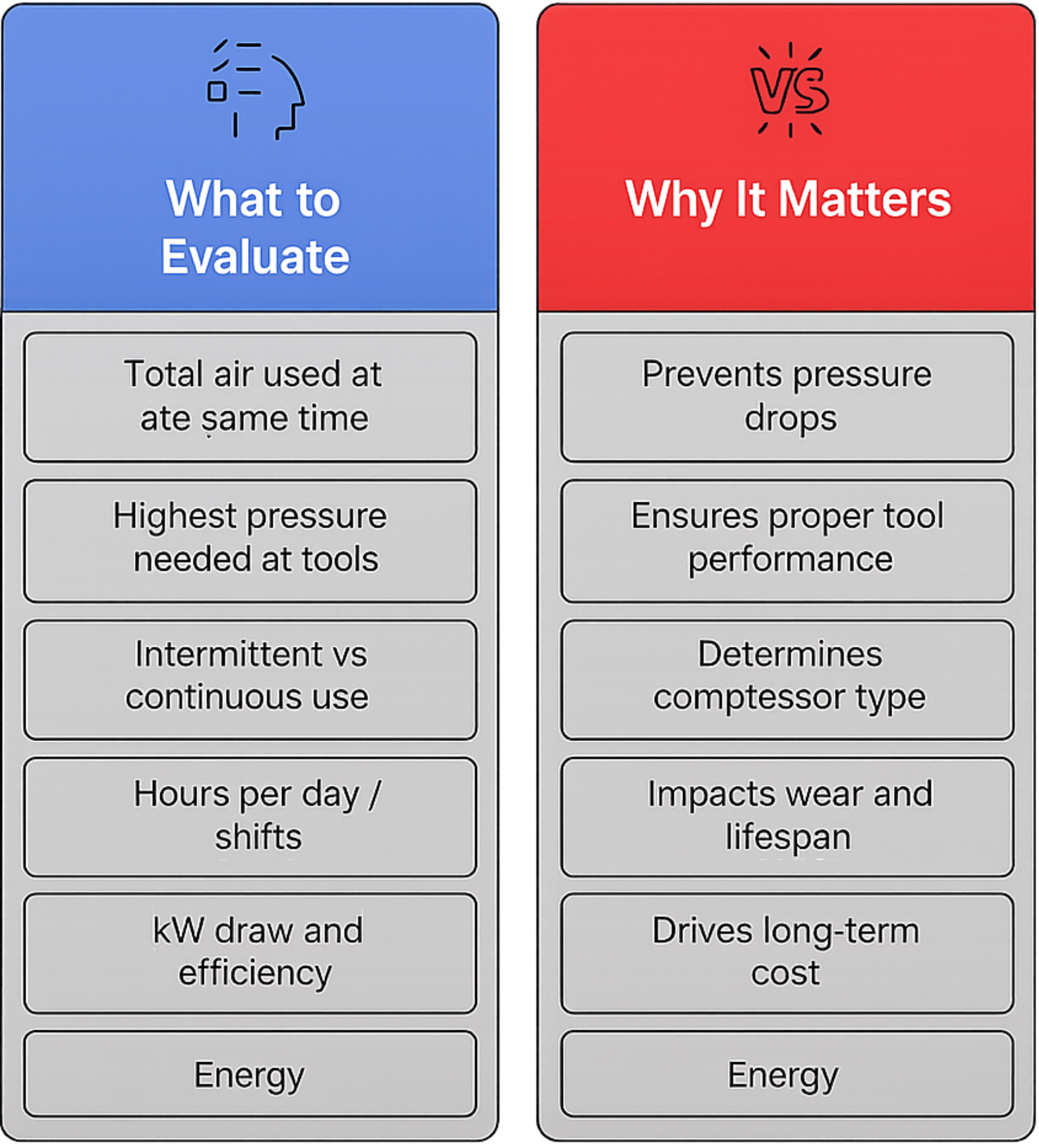
What to evaluate when selecting an air compressor.
In humid or dirty environments, we often recommend addressing filtration and drying when replacing a compressor. Moisture issues usually show up as tool failures or process contamination before the compressor itself fails. If you need help, start with compressed air treatment systems.
Step 5: Energy use & total cost of ownership
Energy consumption is often the largest operating cost in commercial and industrial compressed air systems. Total cost of ownership includes energy, maintenance, replacement parts, and downtime.
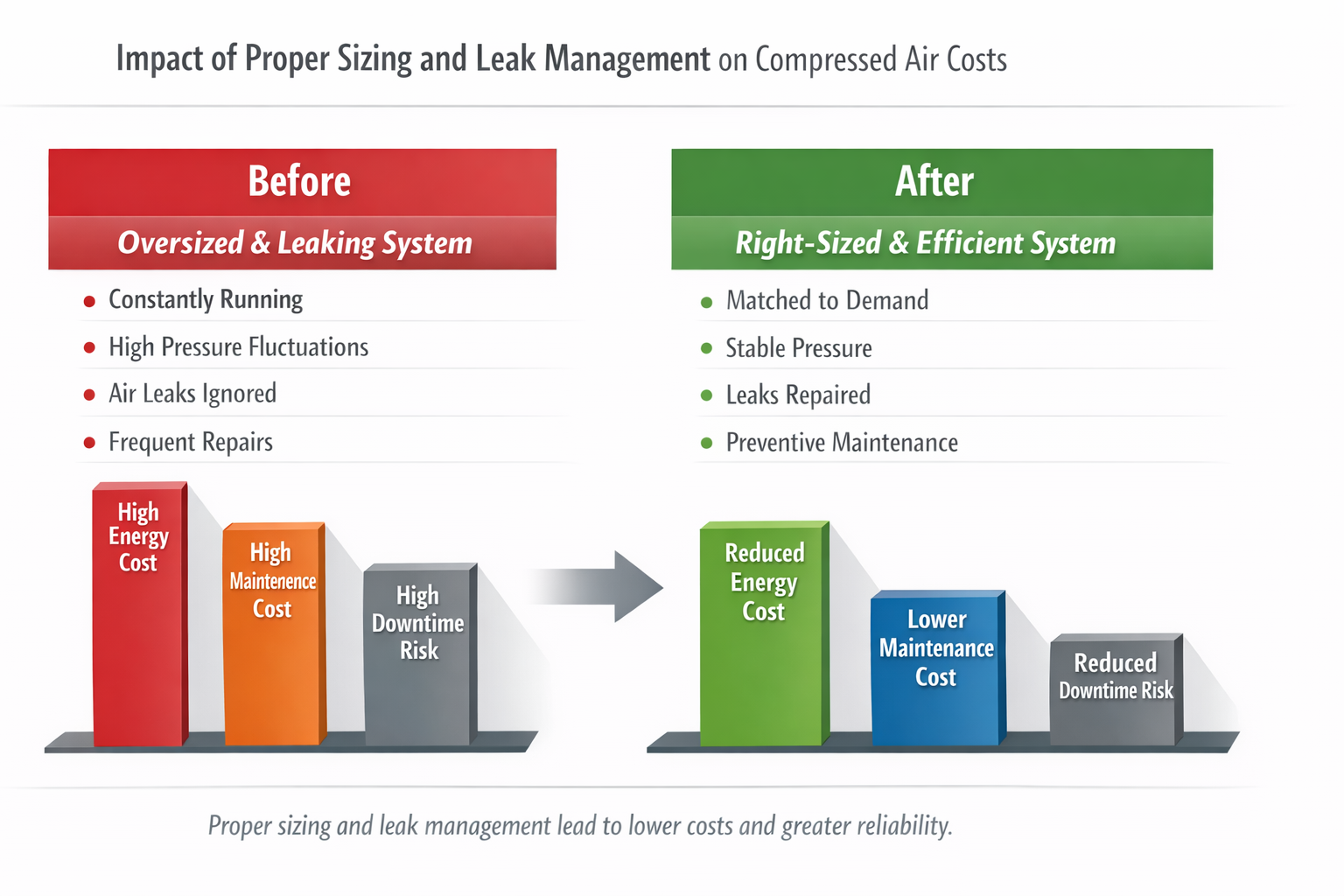
Energy cost breakdown (purchase vs energy vs maintenance vs downtime).
What size industrial or commercial air compressor do you need?
Compressor size should be determined by airflow, pressure, and runtime rather than horsepower alone. Undersized commercial and industrial air compressors are forced to run continuously and fail early.
Prefer an interactive approach? Use the calculator below to translate your operating conditions into a practical recommendation range. If you don’t know every number yet, that’s fine - estimate what you can now and refine as you work through the steps above.
Types of commercial and industrial air compressors
Different compressor designs exist because operating conditions vary widely. Below is a practical way to match compressor type to how air is used.
Rotary screw air compressors for industrial applications
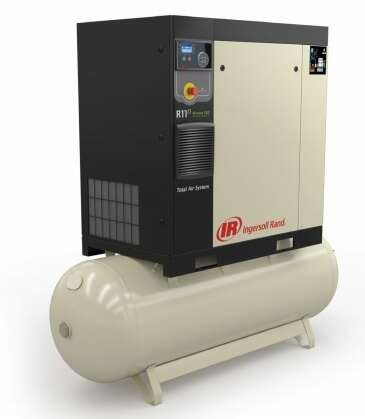
Rotary screw compressors are designed for continuous duty. They are commonly used in manufacturing, processing, and production environments where airflow demand is steady throughout the day.
Two-stage air compressors for commercial shops
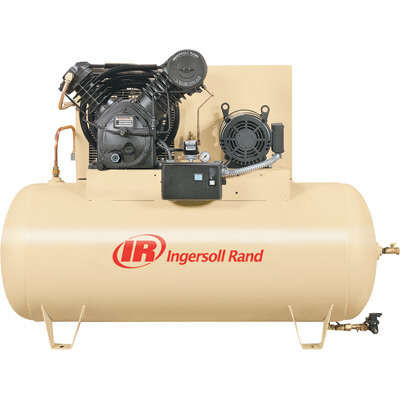
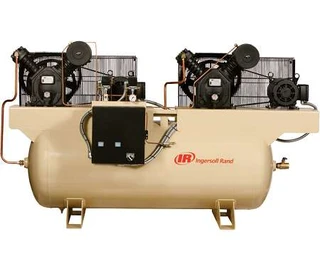
Two-stage compressors are a durable choice for maintenance, automotive, and repair facilities that need higher pressure but have intermittent runtime.
Portable and gas-driven compressors for commercial and industrial job sites
Portable compressors are used where electrical power is limited or the compressor needs to move with the work. Gas compressors are a practical option when you need mobility or power independence.
Industrial Air Power recommended Ingersoll Rand compressor options
We recommend Ingersoll Rand systems because long-term support, documentation, and parts availability remain consistent well after installation. That matters years after day one, especially when uptime is critical.
Browse Ingersoll Rand industrial air compressors on our site if you want to compare models by application.
Watch: how to size an air compressor (CFM/PSI/duty cycle) for your tools and shop.
Featured compressor options
When should one upgrade their air compressor?
Evaluate replacement if you see pressure instability, overheating, frequent repairs, rising energy costs, expanded operations, or new equipment that increases demand.
If you are maintaining an older system, air compressor replacement parts can keep you running while you plan an upgrade. For oil-lubricated systems, correct lubricant selection matters. See air compressor oil.
FAQs about commercial and industrial air compressors
What size air compressor do commercial and industrial facilities need?
Sizing depends on total airflow demand, required pressure, and runtime. Calculate simultaneous CFM use, then add margin for leaks and future expansion.
When should a commercial facility upgrade to a rotary screw compressor?
Upgrade when air demand becomes continuous, pressure instability affects operations, or a piston compressor is running most of the day.
How does Industrial Air Power help size commercial air compressors?
We evaluate airflow demand, pressure requirements at the point of use, duty cycle, and environment. We then recommend equipment that meets demand efficiently with room to grow.
Conclusion
Commercial and industrial compressed air systems perform best when they are sized for real operating conditions. The right compressor improves reliability, reduces operating cost, and minimizes downtime.
If you are wanting to compare options, see our full air compressor catalog.